Home     Daily Blog     Galleries     Maps     Contact

Showing posts with label in the news. Show all posts

Monday, November 23, 2020

In the news: Historic Nashville's 2020 List of Nashville Nine

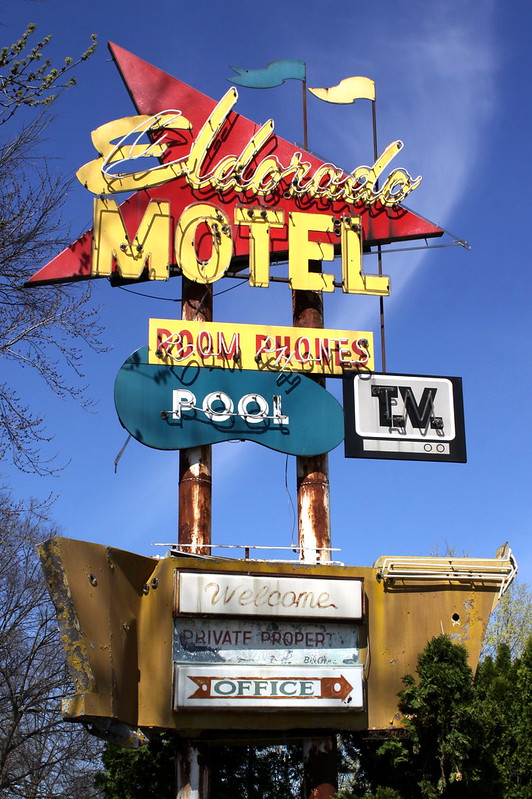
Eldorado Motel - Nashville, TN

Every year, Historic Nashville Inc. creates their yearly list of historic endangered properties, which the call the Nashville Nine. The 2020 list has been published, which you can read at the link below:

2020 Nashville Nine


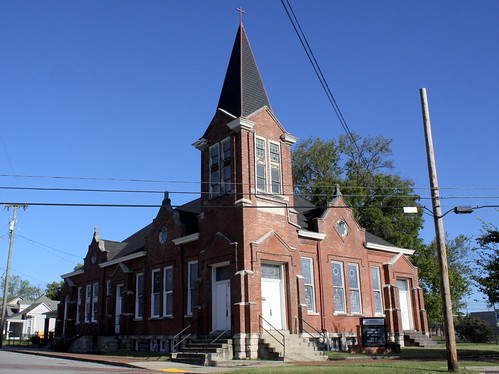
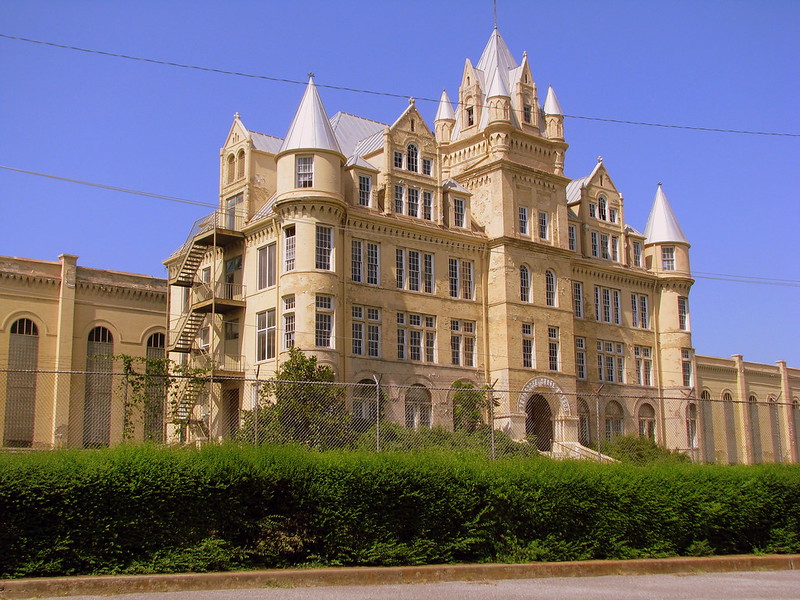
The Eldorado Motel neon sign above is facing problems due to years of neglect. The Tennessee State Prison and the Hopewell Baptist Church seen below were damaged by the Mar. 3, 2020 tornado.

Old Tennessee State Prison version A

Third Baptist Church - Nashville, TN

Friday, March 6, 2020

Weiss Liquors Neon Sign - Damaged by Tornado

Weiss neon sign

This sign appeard to have been severely damaged by the Mar. 3, 2020 tornado, as seen in this WTVF photo: ewscripps.brightspotcdn.com/dims4/default/96d9f75/2147483...

Main St. East Nashville (old U.S. 31E)

I loved how the sky looked on the day I took this photo. There were dark stormclouds in the sky, with the sun peaking through the clouds behind me to illuminate the sign. If you didn't notice it, there is a neon drop coming out of the jug. The second drip is on the R and then a splat.

Friday, December 13, 2019

8 New listings on the National Register of Historic Places - Dec. 2019

There are 8 new Tennessee listings on the National Register of Historic Places, including the two places pictured below. Text is from the press release

Bank of Loretto

Bank of Loretto (Loretto - Lawrence County)

The Bank of Loretto was chartered in 1910 and after the original bank building burned circa 1924, the current building was constructed. C.K Colley and Company Architects from Nashville were the architects of the building. Colley practiced from 1899 to 1956, but the C.K. Colley and Company was only in operation from 1922-1928. Local lumber company Augustin Lumber, established in 1900, built the new bank building. The Classical Revival style bank is sheathed in stone veneer and distinguished by its symmetrical façade and pedimented entrance. Semi-circular arched windows flank the single-door entrance. The interior retains historic flooring and skylights. The Bank of Loretto moved to a larger building in 1967 and the building is now used as a restaurant.

Water Street Abbey - Lewisburg, TN

Presbyterian Church, U.S.A. (Lewisburg –Marshall County)

Better known today as the Water Street Abbey, the historic church building was constructed in 1910 for the Presbyterian Church, U.S.A. Rev. E. L. Orr drew plans and made suggestions for the structure, but the actual architect is unknown. The first services in the new sanctuary were held on January 11, 1911. Situated at the corner of Water Street and 3rd Avenue in Lewisburg, it is a prominent example of the Late Gothic Revival style. The exterior of the brick building features a corner bell tower delineated by Gothic arch openings with y-tracery, a steep pitch roof, and large windows. The interior retains its Akron plan, with moveable doors that allow for classroom spaces or a larger sanctuary when needed. When the Presbyterian Church, U.S.A. disbanded in 1939, the building was purchased by the Water Street Church of Christ, who held services here until 1967. In 2007 the current owners purchased the building and plan to rehabilitate it for an event venue.

The list also includes a boundary increase for the Jonesborough Historic District and the world's largest bomb shelter which is in a gated community in Memphis.

See the entire list here.

Tuesday, August 20, 2019

In the news: iconic Grand Guitar building is demolished

World's Largest Guitar - US11W view

Grand Guitar view from US Highway 11W

World's Largest Guitar - Interstate View

View from the rest area along Interstate 81

This had been several things over the years, but was vacant for many years. Most recently, it was Joe Merrell's Grand Guitar Museum and Gift Shop.

This spot is strategically placed where you can see it from the Interstate, I-81, near the TN/VA border in Bristol. The street in front is US11W.

The Guitar was 70 feet long and three stories high.

Despite the well-known building being listed on the National Register of Historic Places, it was demolished in August, 2019.

Read more from this story in Bristol's newspaper.

Wednesday, April 24, 2019

In the news: Loudon County Courthouse sustains heavy damage in fire

Loudon County Courthouse - Loudon, TN
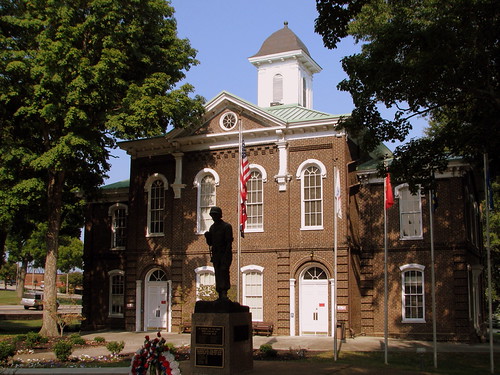
The photo above is of the Loudon County Courthouse in 2010.

"Flames burst through the roof of the Loudon County Courthouse on Tuesday evening as firefighters worked to battle a blaze that broke out at the historic building.

Crews with the Loudon and Lenoir City fire departments responded shortly before 6:30 p.m. to the courthouse, located at 601 Grove St. in downtown Loudon. They quickly called for backup.

Heavy smoke could be seen pouring from the roof of the building, which dates back to the 1870s and is on the National Register of Historic Places."

Read the entire story from the Knoxville News Sentinel.


Also, check out this second story which deals with the aftermath of the blaze and includes some day after photos.

Hopefully, enough of the building can be salvaged so that it can be rebuilt to its former glory. Below are two more photos of this courthouse, another from 2010 and one from 2006.

Loudon County Courthouse - Loudon, TN Loudon County (TN) Courthouse

Saturday, March 23, 2019

In the News: Nashville Sounds Greer Stadium Guitar Scoreboard for sale

What the Nashville Sounds are known for

Greer Stadium, the previous stadium for the Nashville Sounds, was unremarkable except for the Guitar-shaped scoreboard. If you have $54,000 lting around, you can now bid on it.

Read the story from the Tennessean newspaper.

Thursday, December 21, 2017

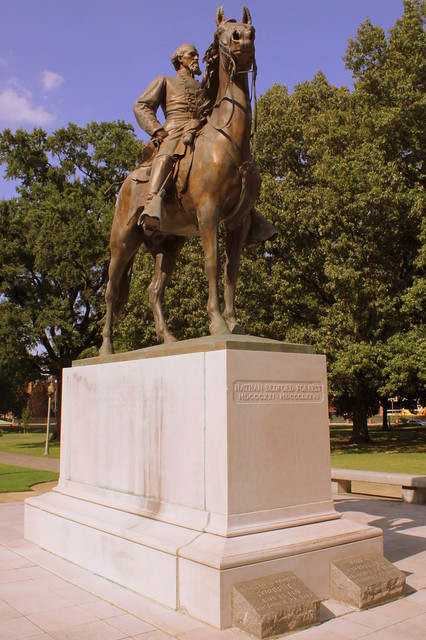
In the news: Nathan Bedford Forrest statue removed in Memphis

Newsworthy: Nathan B. Forrest statue to be removed?
(Photo from 2015)

The City of Memphis has been trying to remove this statue for a while. They have been looking for a legal solution, so they sold Health Springs Park to a private company, then the new private owners removed the Forrest statue.

Read the story here.

Here is my write-up from 2015 when the statue removal talks became prominent:

Disclaimer: Recently, everything that is associated with Nathan Bedford Forrest or the Confederacy in general has become controversial. I take no sides in the matter, but I am documenting this for the historical and newsworthy nature.

By now, most people know that Nathan Bedford Forrest was a general in the Civil War for the Confederate Army. Then after the war, he became a leader for the Klan. Forrest stated a desire to be buried among his troops. Upon his death in 1877, he was buried at Elmwood Cemetery in Memphis.

At the turn of the century, the Sons of Confederate Veterans wanted a more prominent tribute to General Forrest. In 1905, the bodies of Forrest and his wife Mary were re-interred at this park. Atop the graves was this monument and equestrian statue by the E. Gruet Jeune Foundry in Paris. The park was named Forrest Park. Today, the site is on the National Register of Historic Places.

The existence of this park and statue has not set well with several leaders of the Memphis community. In 2013, this park along with Confederate Park and Jefferson Davis Park were renamed. Today, this park is known as Health Sciences Park after the UT campus next door.

With the recent horrific Charleston Church shootings, there has been a renewed intensity in removing public tributes to Forrest and other Confederate leaders. On July 7, 2015, the Memphis City Council voted unanimously to exhume the Forrest family and move them and the statue to another location. (They probably would be moved back to Elmwood Cemetery or the highest bodder.)

The legal maneuvering doesn't stop there. After the city finalizes their removal, then the city has to officially file a lawsuit in probate court. At that point, the Forrest descendants will also appear in court, and they will fight to keep everything the way it is.

A couple of other notes. There is a rumor that the city really has a desire to expand the UT Health Sciences Campus onto this park ground and perhaps that is their real motivation. Also someone had spray painted the other side with [Edited] the KKK; while the graffiti was cleaned, it was still readable. If this does get moved, I am sure I will photograph it at the new location as well.
Saturday, June 3, 2017

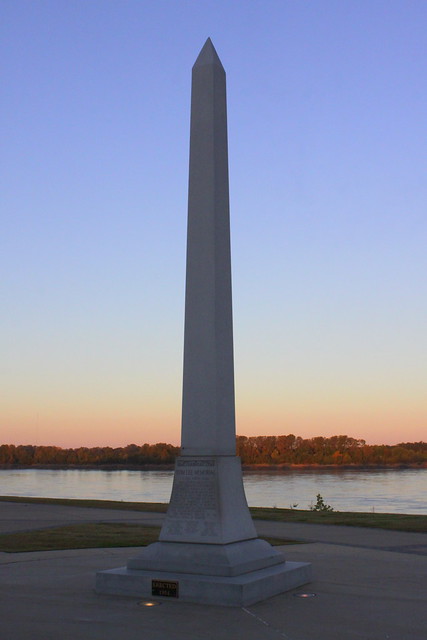
In the news: Tom Lee Park Obelisk in Memphis toppled by storm

Tom Lee Obelisk (View at dusk) - Memphis Riverfront

Late during the afternoon of May 8, 1925, Tom Lee steered his 28 ft skiff Zev upriver after delivering an official to Helena, Arkansas.
Also on the river was a steamboat, the M.E. Norman, carrying members of the Engineers Club of Memphis, the American Society of Civil Engineers, and their families. Lee witnessed the M.E. Norman capsize in the swift current 15 mi (24 km) downriver from Memphis at Cow Island Bend. Although he could not swim, he rescued 32 people with five trips to shore. Lee acted quickly, calmly and with no regard for his own safety, continuing to search after night fell. Because of his efforts, only 23 people died.

Today. Tom Lee Park is a city park located to the immediate west of downtown Memphis overlooking the Mississippi River. Encompassing about 30 acres parallel to the river for about one mile, it offers panoramic views of the river and the shores of Arkansas on the opposite side.

Tom Lee died of cancer in 1952. Two years later, the park was named in his honor and a granite obelisk was erected. In October 2006, a bronze sculpture by artist David Alan Clark was erected in the park to commemorate the event and to honor the civil hero. The sculpture depicts the rescue of a survivor saved from drowning in the Mississippi River.

In late May, a strong windstorm powered through Memphis which knocked over this monument and shattered it into many pieces. Read the full story and see a video here.

Monday, April 10, 2017

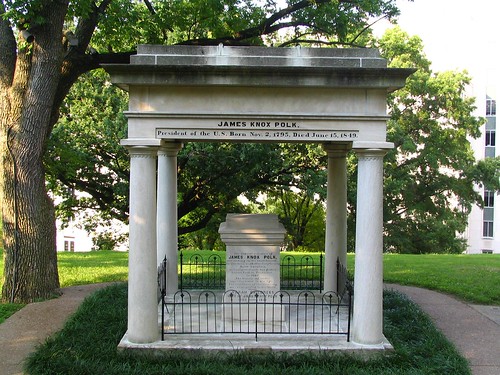
In the news: Will President Polk's Grave move?

President James K. Polk tomb, Nashville

The body of President James K. Polk and his wife Sarah are buried on the grounds of the Tennessee State Capitol. His first permanent resting place was at Polk Place, his mansion in downtown Nashville. After Sarah Polk died many years later, Polks grave was moved as developers wanted to use the land of Polk Place for another purpose, and the mansion was torn down. (This story by itself is very irksome to historic preservationists.)

Recently, The TN state senate voted to move Polk's remains from the state capitol to the Polk Ancestral home in Columbia, TN. You can read that story here.

However, the Tennessee Historic Commission as well as other preservation groups are against the move. You can read that story here.

Monday, March 20, 2017

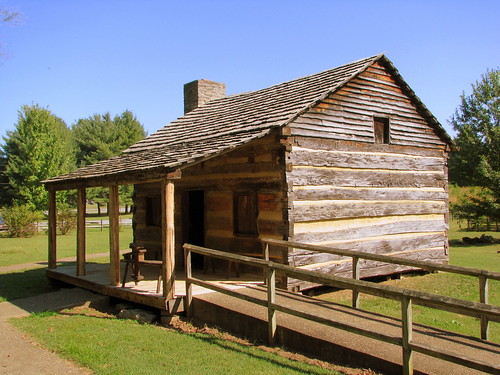
In the news: Davy Crockett replica birthplace cabin to be replaced

Davy Crockett replica birthplace cabin

The place where Davy Crockett was born has been preserved at Davy Crockett Birthplace State Park near Limestone, TN in Greene County. By preserved, I mean the spot has been marked as the original log cabin is long gone. The state park has built a couple of replicas over the years and the one in the picture above was built in 1986 for the state's Bicentennial.

According to the story linked below, a new replica cabin is scheduled to be built and the one above will be preserved elsewhere in the park.

Greeneville Sun: Crockett Cabin Ready For Uprooting

Thursday, February 2, 2017

In the news: Home Office of Elvis Presley’s former manager in Nashville being dismantled

Elvis in Nashville - Col. Tom Parker's Office

The former home of Col. Tom Parker, Elvis Presley's former manager is being taken down. The home has been along Gallatin Pike (US31E) in Madison and has been up for sale for many years with no buyers.

See this video for the complete story.

Monday, October 17, 2016

In the news: 2016 Nashville Nine released

Every year, Historic Nashville Inc releases their list of Nashville's Endangered historic places.

Check out the list here.

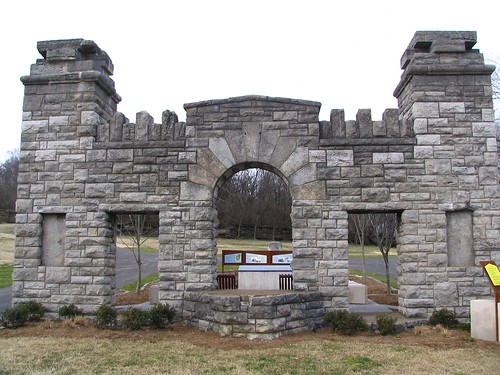
Included on the 2016 list is Fort Negley:

Gates to Ft. Negley

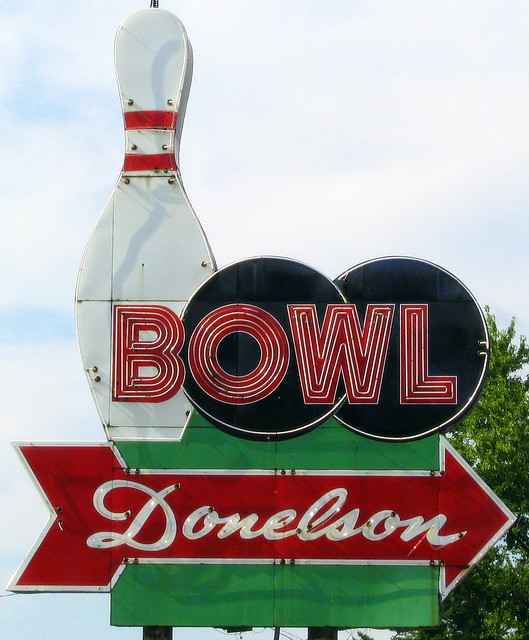
Also on the 2016 list are Crescent Amusement Company bowling alleys:

Madison Bowling neon sign

Madison Bowling sign at Night

Donelson Bowl

Tuesday, July 26, 2016

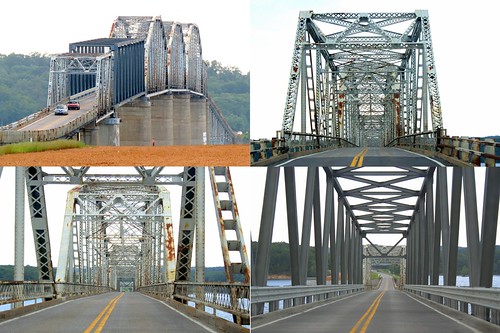
In the news: Eggner's Ferry Bridge demolished

Eggner's Ferry Bridge

The Eggner's Ferry Bridge, which crosses Kentucky Lake (and the Tennessee River) at Land Between the Lakes, has been demolished by KyDOT. You can see video of it here:
http://www.wsmv.com/story/32523095/crews-demolish-old-eggners-ferry-bridge-in-ky

This old bridge made national headlines in January 2012 when a boat crashed into this bridge, causing one of the spans to fall down. The bridge that opened in 1932 and carries US68 across the Tennessee River and Kentucky Lake has since reopened but is in the process of being replaced. You can read more about the incident here: en.wikipedia.org/wiki/Eggner%27s_Ferry_Bridge#January_201...

When looking at the photos from summer 2014, it's easy to spot the replacement truss. KYDOT was already starting construction on the replacement then. Here is a video of me driving over all of the Land Between the Lakes bridges: www.youtube.com/watch?v=DsUjtvvqyNs

Thursday, December 17, 2015

In the news: Jackson's First Presbyterian Church & Home added to National Register

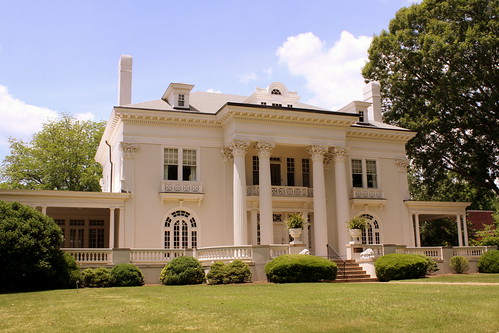
This Home and the church have been added to the National Register of Historic Places in Dec. 2016.

Memorial Hall a.k.a. Chevy Chase - Jackson, TN

Originally, this was land that belonged to Confederate Colonel William H. Stephens in 1824, known as Willow Banks. This home was built in 1918 by Jackson Sun newspaper owner Clarence Pigford with the house named Chevy Chase. Since 1952, the land and the home have been owned by Jackson's First Presbyterian Church who built their church building next door.

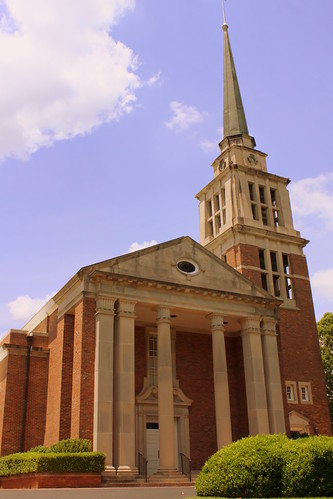
First Presbyterian Church with Carillon - Jackson, TN

The First Presbyterian Church is located along US45 in Jackson, TN. The grounds have been named a state certified arboretum. Inside the steeple tower is a traditional carillon of 47 bells.

The church's carillon is one of 17 carillons in Tennessee. It is dedicated to the soldiers of Jackson and Madison County who offered and gave their lives for our country. The bells themselves were founded and tuned in France in the late 1940s. They chime regularly, and offer the spectacular prelude to the Jackson Starlight Symphony, a free annual concert on the church lawn.

Read more about it in this article from the Jackson Sun:
www.jacksonsun.com/story/news/local/2015/12/11/chevy-chas...

Sunday, November 8, 2015

In the News: Ten in Tenn: Antoinette Hall Opera House - Pulaski, TN

A few days ago, the Tennessee Preservation Trust released their 2015 list of endangered historical sites in the state. This week on the blog, we are talking about some of the properties on this list. Here is how TPT describes the list:
"The Tennessee Preservation Trust’s Ten in Tennessee Endangered Properties List Program is TPT’s strongest advocacy tool for the state’s most endangered historic sites. Each year, TPT seeks nominations for the “Ten in Tenn” from the public from each of Tennessee’s nine Development Districts."

You can also see past entries on their website here:
http://www.tennesseepreservationtrust.org/ten-in-tn/?ref=archive

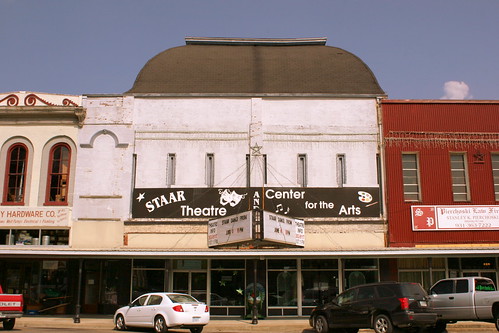
Antoinette Hall Opera House / STAAR Theater - Pulaski, TN

Antoinette Hall, also known as the Pulaski Opera House, was built in 1868 and is one of few remaining second story opera houses still intact in the United States as well as one of the oldest. Since 2008, local non­‐profit Southern Tennessee Area Arts Repertory (STAAR) has owned the property and worked to raise awareness for the historic structure. However the group does not have the funds for extensive restoration work needed to save the building. Weather and time has caused severe deterioration of the structure and the walls are currently being held together by a cable system.

You can track their progress on their Facebook page.

Saturday, November 7, 2015

In the News: Ten in Tenn: Niota, TN Train Depot

A few days ago, the Tennessee Preservation Trust released their 2015 list of endangered historical sites in the state. This week on the blog, we are talking about some of the properties on this list. Here is how TPT describes the list:
"The Tennessee Preservation Trust’s Ten in Tennessee Endangered Properties List Program is TPT’s strongest advocacy tool for the state’s most endangered historic sites. Each year, TPT seeks nominations for the “Ten in Tenn” from the public from each of Tennessee’s nine Development Districts."

You can also see past entries on their website here:
http://www.tennesseepreservationtrust.org/ten-in-tn/?ref=archive

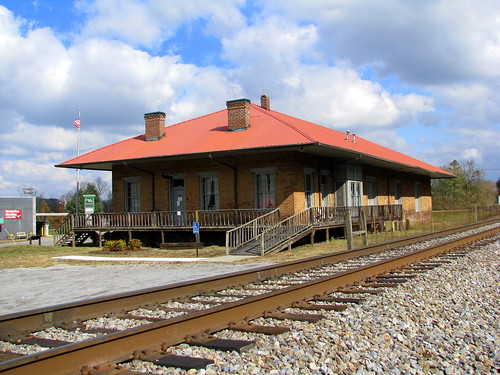
Niota, TN Train Depot

The Niota Depot is the oldest surviving train depot in Tennessee. It was constructed in 1854 as part of the East Tennessee & Georgia Railroad. At the time, Niota was known as Mouse Creek. Today, the depot serves as the Niota city hall. The Depot still has the original gun ports used by both the Union and Confederate Armies during the Civil War.

Niota is located in McMinn County, just north of Athens.

Back when the town was named Mouse Creek, there was another city on the other side of Knoxville known as Mossy Creek. With the similar town names, it wasn't uncommon for mail to get delivered to the wrong town. In 1897, there was a prominent wedding in town where the families had ordered a lot of ice cream for the guests, but was delivered to the wrong town. This was the last straw and both towns changed their name. Niota was the name of an Indian chief. (Mossy Creek became Jefferson City.)

From TPT:

The building was listed on the Tennessee Preservation Trust’s 2009 “Ten in Tenn” list, after which it received the attention and repairs to consider the property saved. Then in July of 2015, a collapse of one of the chimneys caused a partial ceiling collapse and the building was subsequently condemned. Home to Niota City Hall, the City of Niota currently does not have the necessary funds to repair the damage. If the building is not reoccupied by the city, it will be forfeited back to the railroad and likely torn down.

For more, see this Chattanooga Times Free Press article.

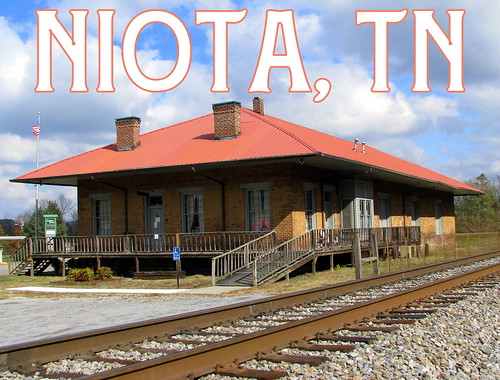
Also, this photo is available as a post card: Order it here!

Things for sale: Post Card: Niota, TN


Friday, November 6, 2015

In the News: Ten in Tenn: Great Falls Cotton Mill - Rock Island, TN

A few days ago, the Tennessee Preservation Trust released their 2015 list of endangered historical sites in the state. This week on the blog, we are talking about some of the properties on this list. Here is how TPT describes the list:
"The Tennessee Preservation Trust’s Ten in Tennessee Endangered Properties List Program is TPT’s strongest advocacy tool for the state’s most endangered historic sites. Each year, TPT seeks nominations for the “Ten in Tenn” from the public from each of Tennessee’s nine Development Districts."

You can also see past entries on their website here:
http://www.tennesseepreservationtrust.org/ten-in-tn/?ref=archive

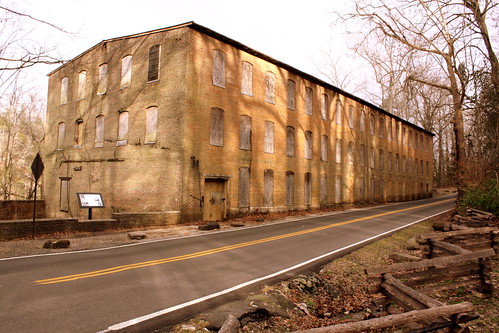
Falls City Cotton Mill - Rock Island, TN

This abandoned mill is located inside of Rock Island State Park along highway TN287 right near the parking lot to view the great falls. Here's the story according to the historical marker:

Falls City Cotton Mill was built in 1892 by Asa Faulkner and several partners. It was the only textile mill in Warren County prior to 1930. The mill was in operation until the great flood of 1902, which destroyed many of the mills in the region. Situated on the bluff above the Great Falls of the Caney Fork River, the structure survived but was forced to close due to the loss of the turbine that washed away.

The Mill was operated by a flume, turbine, ropes, and pulleys powered by water diverted from the falls. The operation included the manufacture of cotton, wood products, and was well known for its heavy cotton sheeting.

Mr. Faulkner, wanting to help those most in need, hired and housed some 300 workers, predominantly widows and children. This created a booming "city" that included a blacksmith, post office, farm, market, and store of company products.

The building has been used for storage for the last 50 years and deterioration over the last 20 has compromised the building’s integrity. Owned by the Tennessee Valley Authority, the building is leased to the Tennessee Department of Environment & Conservation for use by Rock Island State Park. However, bureaucracy, cost of repairs and lack of a vision plan has left the landmark to deteriorate.

Thursday, November 5, 2015

In the News: Ten in Tenn: Blair's Ferry Storehouse - Loudon, TN

A few days ago, the Tennessee Preservation Trust released their 2015 list of endangered historical sites in the state. This week on the blog, we are talking about some of the properties on this list. Here is how TPT describes the list:
"The Tennessee Preservation Trust’s Ten in Tennessee Endangered Properties List Program is TPT’s strongest advocacy tool for the state’s most endangered historic sites. Each year, TPT seeks nominations for the “Ten in Tenn” from the public from each of Tennessee’s nine Development Districts."

You can also see past entries on their website here:
http://www.tennesseepreservationtrust.org/ten-in-tn/?ref=archive

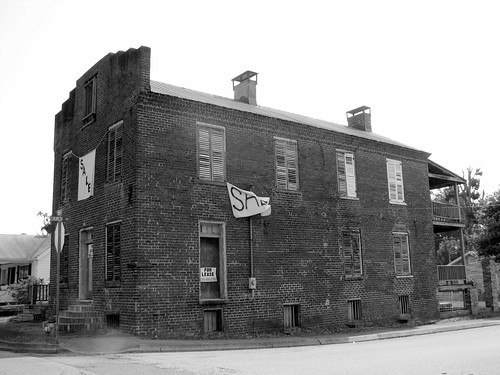
Blair's Ferry Storehouse - Loudon, TN

From TPT:

The Blair’s Ferry Storehouse is one of the oldest remaining commercial buildings in East Tennessee and one of the regions’ earliest surviving examples of a structure built specifically as a warehouse. Built in 1835, the property is reflective of the early 19th century commerce along the Tennessee River. It was listed on the National Register in 1977 and much of the building’s architectural character remains intact. However, the current owner has limited funds to maintain the building and it is succumbing to deterioration and neglect.

For more info, see this wikipedia article.

Wednesday, November 4, 2015

In the News: Ten in Tenn: Bonnie Kate Theater - Elizabethton, TN

A few days ago, the Tennessee Preservation Trust released their 2015 list of endangered historical sites in the state. This week on the blog, we are talking about some of the properties on this list. Here is how TPT describes the list:
"The Tennessee Preservation Trust’s Ten in Tennessee Endangered Properties List Program is TPT’s strongest advocacy tool for the state’s most endangered historic sites. Each year, TPT seeks nominations for the “Ten in Tenn” from the public from each of Tennessee’s nine Development Districts."

You can also see past entries on their website here:
http://www.tennesseepreservationtrust.org/ten-in-tn/?ref=archive

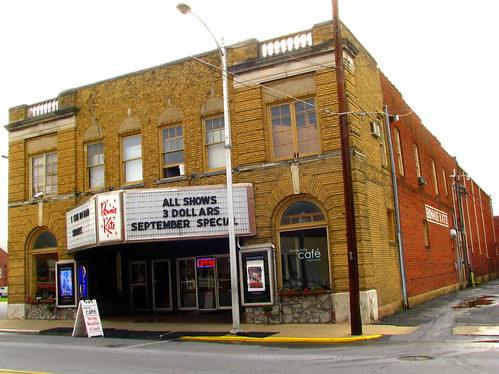
Bonnie Kaye Theater - Elizabethton, TN

From the Elizabethton Walking tour brochure (Stop #29)

The Bonnie Kate Theater, another Classical Revival Design, formally opened on May 16, 1926. All 500 of the seats were filled and the audience enjoyed the showing of a silent film. A local music program "Barrels of Fun" originated here in the 1930s and in the 1940s was broadcast by two radio stations (one next door) to a listening audience of 3.2 million people in the southeast area. This was the first theater East of the Mississippi to have rocking chair seating (1969).

From TPT:

The Bonnie Kate Theater from 1926 is the last surviving movie house in Elizabethton and both part of the local Elizabethton Historic District and the National Register Historic District. It embodies
the distinctive architectural characteristics of theaters built during the 1920s and fully sat houses up to 500. Unchecked roof deterioration has led to multiple leaks and subsequent water damage. Despite strong community and local government interest to save the building, no action has been taken by the building owners to make necessary repairs or correct the damage caused by the leaks.

For more, see this WCYB news report.

Tuesday, November 3, 2015

In the News: Ten in Tenn: Hiram Masonic Lodge No. 7 - Franklin, TN

A few days ago, the Tennessee Preservation Trust released their 2015 list of endangered historical sites in the state. This week on the blog, we are talking about some of the properties on this list. Here is how TPT describes the list:
"The Tennessee Preservation Trust’s Ten in Tennessee Endangered Properties List Program is TPT’s strongest advocacy tool for the state’s most endangered historic sites. Each year, TPT seeks nominations for the “Ten in Tenn” from the public from each of Tennessee’s nine Development Districts."

You can also see past entries on their website here:
http://www.tennesseepreservationtrust.org/ten-in-tn/?ref=archive

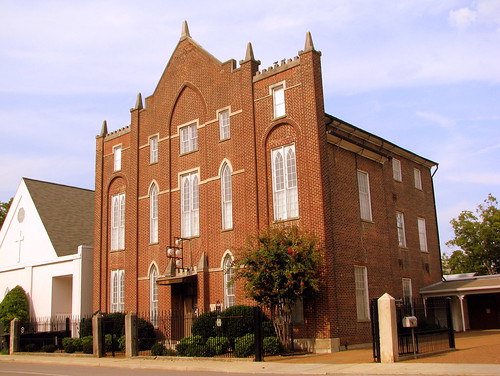
Hiram Masonic Lodge No. 7 - Franklin, TN

Hiram Masonic Lodge No. 7, a Gothic revival building constructed in 1823, is the oldest public building in Franklin, Tennessee. It houses Hiram Lodge No. 7, founded in 1809, and is the oldest Masonic Hall in continuous use in Tennessee. It was the location of the negotiation and signing of the Treaty of Franklin in 1830, in which the Chickasaw Indians sold their lands prior to being moved west to today's Oklahoma. Sitting president Andrew Jackson was a participant, the only time a U.S. President would journey to an Indian council for the purpose of making a treaty. The building was used as a hospital for wounded Union soldiers after the Battle of Franklin, during the American Civil War. It was declared a National Historic Landmark in 1973.

The brick building is three stories tall, five bays wide and five bays deep. The front roof line is gabled in the center, battlemented to either side of the center gable, and surmounted by five obelisk pinnacles. The windows of the first two floors at the front are elongated Gothic with 11 lights over eight set in semi-circular indented two-story brick arches. The central windows over the entrance are set in a Gothic indented arch of three stories. The windows of the third floor are rectangular, 4 lights over four. Plain rectangular windows are found along the sides and rear of the building--on the first two floors, 12 lights over 16; on the third floor, 8 lights over 8.

Still occupied by the Hiram Masonic Lodge No. 7, the group has actively sought education and funding for the preservation and restoration of the building, but does not have the funds for necessary structural repairs. Multiple additions made to the structure in 1856 and 1914 altered the stability of the walls, which has caused severe structural damage.

For more, read this article.