Home     Daily Blog     Galleries     Maps     Contact

Showing posts with label Nickajack Lake. Show all posts

Thursday, July 1, 2021

Nickajack Cave Wildlife Refuge

Nickajack Cave Wildlife Refuge

Located in Marion County, TN, Nickajack Cave not only has quite an interesting history but also has an important collection of endangered species. The entrance is 140 feet wide and originally 50 feet high.

Originally located on Cherokee Land, the cave was located near the Cherokee city of Nickajack. Beginning in 1800, saltpeter (which is a key ingredient to gunpowder) was mined here, and eventually used for the War of 1812 and then the Civil War. Around the time of the war, the cave was owned by Robert Cravens, who also owned Lookout Mountain Cave and is best known for his Cravens House.

Starting around the 1870's, the cave opened commercially. The Shellmound Railroad Station was very close to the cave which operated passenger service to and from Chattanooga daily. Tour guides would take visitors through the cave on boats. By the 1940's, the cave was run by Leo Lambert (who also operated Ruby Falls) under the name Nickajack LaCaverns. By the early 1960's, the cave was closed commercially, but the cave was still accessible by people who were willing to walk a quarter mile in waste-deep water.

One part of the lore of the cave happened in 1927 when the cave was being shown by Lawrence S. Ashley, who supposedly disappeared in the cave during exploration. His disappearance was covered by both the local Chattanooga newspapers and the New York Times. After being "lost" from August 15 through August 22, 1927, Ashley reappeared, claiming that he dug his way out through a new entrance located 8 miles away. This entire episode was a hoax designed to gain publicity for the cave and increase the number of tourists visiting the cave.

in 1967 with the construction of Nickajack Dam about a mile away, the landscape of the entire area has changed. What used to be an entrance 50 feet high is now half underwater. The old ticket booth and entrance gate are under the water there somewhere.

in 1968, Johnny Cash visited the cave with the intention to commit suicide. While there, he had a spiritual experience that caused him to stop his drug use.

Environmentally, the cave his home to about 100,000 Gray Bats, which is an endangered species. Every evening, many of the fly out of the cave for about 45 minutes to feed on insects. In 1980. the Tennessee Wildlife Refuge Agency closed off access into the cave and added a fence across the entrance. Also at the cave are Indiana Bats which hibernate here. Cliff swallows nest on the natural rock face above the entrance to the cave. Until the cave was flooded, there were three species that lived only at the cave including a crustacean, a pseudoscorpion and a beetle.

From the parking area, the TWRA added a 1,000 foot boardwalk which provides the best view of the entrance and the nightly bat show.

Monday, June 1, 2020

The noteworthy spot where Tennessee, Georgia and Alabama all meet


The spot where Tennessee, Georgia and Alabama meet has a marker. Over the last decade, this spot has been in the news as Georgia has wanted access to the Tennessee River when the state suffers a drought.

This video includes instructions on how to get there, plus the nearby Nickajack Cave.

Wednesday, August 31, 2016

CSX 5318 Crosses the Nickajack Lake Causeway

CSX 5318 Crosses the Nickajack Lake Causeway

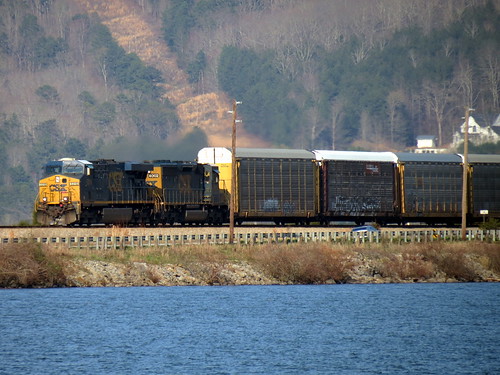
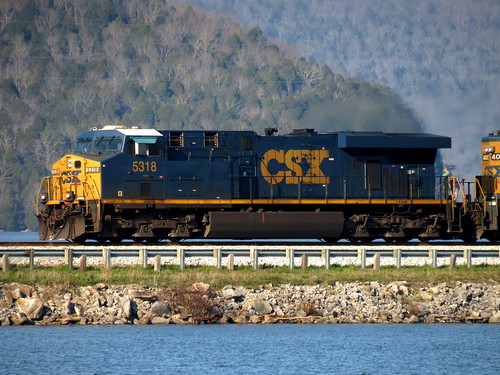
Nickajack Lake is formed by Nickajack Dam on the Tennessee River in Marion County, TN. This causeway carries one set of tracks as well as highway TN156. The tracks are part of the CSX mainline and every train from Chattanooga to either Nashville or Huntsville passes through here.

CSX 5318 Crosses the Nickajack Lake Causeway

Friday, December 5, 2014

Nickajack Dam

Nickajack Dam

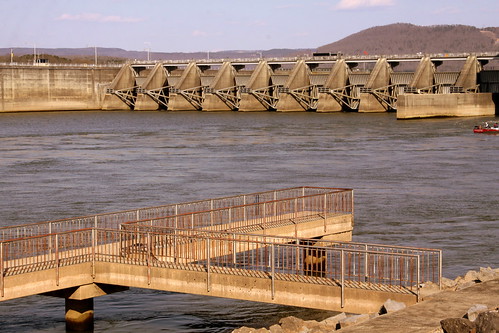
Nickajack Dam is a TVA hydroelectric dam on the Tennessee River just upstream from Chattanooga.

Before the completion of Hales Bar Dam in 1913, the Tennessee River Gorge was one of the major impediments— along with Muscle Shoals and the Elk River shoals— to year-round navigation on the Tennessee River. Along with unpredictable water levels, the gorge was filled with numerous water hazards, some of which had been given nicknames such as "The Suck", "The Skillet", and "The Pan." In the early 1900s, the U.S. Army Corps of Engineers realized that a dam near the southwestern end of the gorge would flood the water hazards and eliminate the gorge's rapid downstream current. Chattanooga engineer Josephus Conn Guild offered to raise funds to build this dam in exchange for rights to the dam's electrical output. After receiving authorization from Congress in 1904, he organized the Chattanooga and Tennessee River Power Company (later TEPCO) in 1905, and the company began building Hales Bar Dam in October of that year. Hales Bar's weak limestone foundation — which hadn't been considered in the selection of the dam site— presented numerous obstacles from the outset, but the dam was finally completed in 1913.

In 1939, after a contentious court battle, TEPCO was forced to sell its assets— including Hales Bar Dam— to the Tennessee Valley Authority. The dam had been leaking since its construction, and TVA immediately initiated a series of foundation improvements that by 1943 had succeeded in halting the leaks. In 1960, however, the leaks had returned, spilling at an alarming 2,000 cubic feet per second. Around the same time, TVA began expanding locks on its dams to at least 600 feet to accommodate the increase in traffic the river had experienced since World War II, and it was determined that expanding the Hales Bar lock would be "prohibitively" expensive. Rather than spend the necessary expenses to upgrade Hales Bar, a decision was made in 1963 to build a new dam altogether on a more solid bedrock a few miles downstream.

The Nickajack Dam project was authorized January 9, 1964, and construction began April 1, 1964. Funding set aside for repair work on Hales Bar was transferred to the Nickajack project. The reservoir's construction— which basically involved extending the Hales Bar Reservoir 6 miles downstream to Nickajack— required the purchase of 8,300 acres, 500 acres of which had to be cleared. 82 families and 8 miles of roads had to be relocated. Two generators and several switchyard parts were moved from Hales Bar Dam to the new dam. Construction was completed on December 14, 1967, at a cost of $73 million. Operations at Hales Bar Dam were halted the following day, and by September 1968, Hales Bar Dam had been dismantled and its reservoir merged with Nickajack Lake.

Monday, February 10, 2014

Nickajack Cave Wildlife Refuge (view from Highway TN156)

Nickajack Cave Wildlife Refuge (view from Highway TN156)

Located in Marion County, TN, Nickajack Cave not only has quite an interesting history but also has an important collection of endangered species. The entrance is 140 feet wide and originally 50 feet high.

Originally located on Cherokee Land, the cave was located near the Cherokee city of Nickajack. Beginning in 1800, saltpeter (which is a key ingredient to gunpowder) was mined here, and eventually used for the War of 1812 and then the Civil War. Around the time of the war, the cave was owned by Robert Cravens, who also owned Lookout Mountain Cave and is best known for his Cravens House.

Starting around the 1870's, the cave opened commercially. The Shellmound Railroad Station was very close to the cave which operated passenger service to and from Chattanooga daily. Tour guides would take visitors through the cave on boats. By the 1940's, the cave was run by Leo Lambert (who also operated Ruby Falls) under the name Nickajack LaCaverns. By the early 1960's, the cave was closed commercially, but the cave was still accessible by people who were willing to walk a quarter mile in waste-deep water.

One part of the lore of the cave happened in 1927 when the cave was being shown by Lawrence S. Ashley, who supposedly disappeared in the cave during exploration. His disappearance was covered by both the local Chattanooga newspapers and the New York Times. After being "lost" from August 15 through August 22, 1927, Ashley reappeared, claiming that he dug his way out through a new entrance located 8 miles away. This entire episode was a hoax designed to gain publicity for the cave and increase the number of tourists visiting the cave.

in 1967 with the construction of Nickajack Dam about a mile away, the landscape of the entrance area has changed. What used to be an entrance 50 feet high is now half underwater. The old ticket booth and entrance gate are under the water there somewhere.

in 1968, Johnny Cash visited the cave with the intention to commit suicide. While there, he had a spiritual experience that caused him to stop his drug use.

Environmentally, the cave his home to about 100,000 Gray Bats, which is an endangered species. Every evening, many of the fly out of the cave for about 45 minutes to feed on insects. In 1980. the Tennessee Wildlife Refuge Agency closed off access into the cave and added a fence across the entrance. Also at the cave are Indiana Bats which hibernate here. Cliff swallows nest on the natural rock face above the entrance to the cave. Until the cave was flooded, there were three species that lived only at the cave including a crustacean, a pseudoscorpion and a beetle.

From the parking area, the TWRA added a 1,000 foot boardwalk which provides the best view of the entrance and the nightly bat show.