Home     Daily Blog     Galleries     Maps     Contact

Showing posts with label Martin Luther King Jr.. Show all posts

Friday, July 3, 2020

Brown Chapel A.M.E. Church - Selma, Alabama

Brown Chapel A.M.E. Church - Selma, Alabama

From Wikipedia:
Brown Chapel A.M.E. Church is a church in Selma, AL. This church was a starting point for the Selma to Montgomery marches in 1965 and, as the meeting place and offices of the Southern Christian Leadership Conference (SCLC) during the Selma Movement, played a major role in the events that led to the adoption of the Voting Rights Act of 1965. The nation's reaction to Selma's "Bloody Sunday" march is widely credited with making the passage of the Voting Rights Act politically viable in the United States Congress.

It was added to the Alabama Register of Landmarks and Heritage on June 16, 1976 and later declared a National Historic Landmark on February 4, 1982.

For more of the story:
npgallery.nps.gov/pdfhost/docs/NHLS/Text/82002009.pdf

Monday, January 15, 2018

Lorraine Motel / National Civil Rights Museum

Lorraine Motel / National Civil Rights Museum

As America honors Martin Luther King, Jr. on the third Monday in January, I'd like to share this photo of the National Civil Rights Museum that promotes the vision that Dr. King embraced.

Walter Bailey purchased the Windsor Hotel in 1945 and renamed it the Lorraine Motel. Located close to the center of Memphis, during the days of segregation the motel catered to an upscale black clientele.

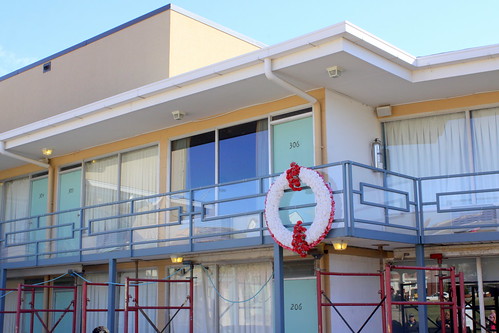
In April 1968, King traveled to Memphis in support of striking sanitation workers. King stayed in room 306, located on the second floor of the Lorraine Motel. At 6:01 PM on April 4, 1968 while he was standing on the balcony outside his room, King was struck by a single bullet, causing him to fall backwards unconscious.

Following the assassination, Bailey left Room 306 undisturbed. While the Motel remained open for a few more years, Bailey worked to preserve the motel as a historic site raising funds to Save the Lorraine. The Martin Luther King Memorial Foundation bought the motel in 1982. The Motel officially closed in 1998 as the property transformed into a museum.

For architectural designs, the museum called upon McKissack & McKissack from Nashville, the first African American architecture firm in America. After purchasing adjoining property, the museum opened in Sept. 1991.

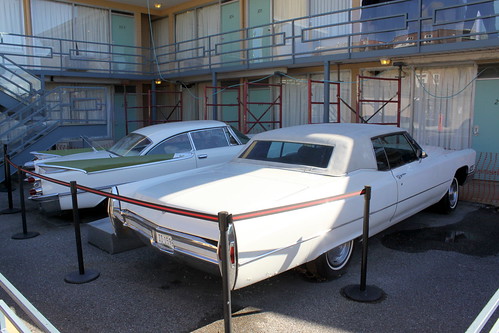
Today, on the grounds of the museum, a wreath is placed at the balcony where King was hit. The original sign for the museum has been preserved outside. From this iconic photo from the balcony there are two cars visible below, and there are replicas of these two cars at the museum today. For now, customers of the museum are allowed to look into the window of Room 306.

Monday, January 16, 2017

Lorraine Motel Sign / National Civil Rights Museum

Lorraine Motel Sign / National Civil Rights Museum

As America honors Martin Luther King, Jr. on the third Monday in January, I'd like to share this photo of the National Civil Rights Museum that promotes the vision that Dr. King embraced.

Walter Bailey purchased the Windsor Hotel in 1945 and renamed it the Lorraine Motel. Located close the the center of Memphis, during the days of segregation the motel catered to an upscale black clientele.

In April 1968, King traveled to Memphis in support of striking sanitation workers. King stayed in room 306, located on the second floor of the Lorraine Motel. At 6:01 PM on April 4, 1968 while he was standing on the balcony outside his room, King was struck by a single bullet, causing him to fall backwards unconscious.

Following the assassination, Bailey left Room 306 undisturbed. While the Motel remained open for a few more years, Bailey worked to preserve the motel as a historic site raising funds to Save the Lorraine. The Martin Luther King Memorial Foundation bought the motel in 1982. The Motel officially closed in 1998 as the property transformed into a museum.

For architectural designs, the museum called upon McKissack & McKissack from Nashville, the first African American architecture firm in America. After purchasing adjoining property, the museum opened in Sept. 1991.

Today, on the grounds of the museum, a wreath is placed at the balcony where King was hit. The original sign for the museum has been preserved outside. From this iconic photo from the balcony there are two cars visible below, and there are replicas of these two cars at the museum today. For now, customers of the museum are allowed to look into the window of Room 306.
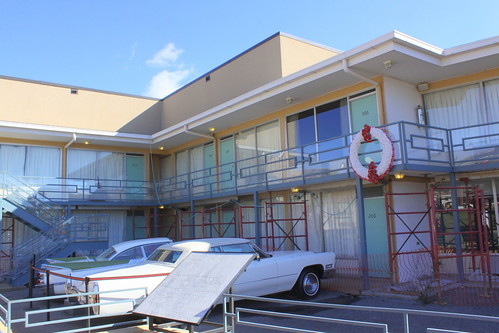
Lorraine Motel / National Civil Rights Museum 1959 Dodge & 1968 Cadillac

Thursday, December 22, 2016

Eldorado Motel - Nashville, TN

Eldorado Motel - Nashville, TN

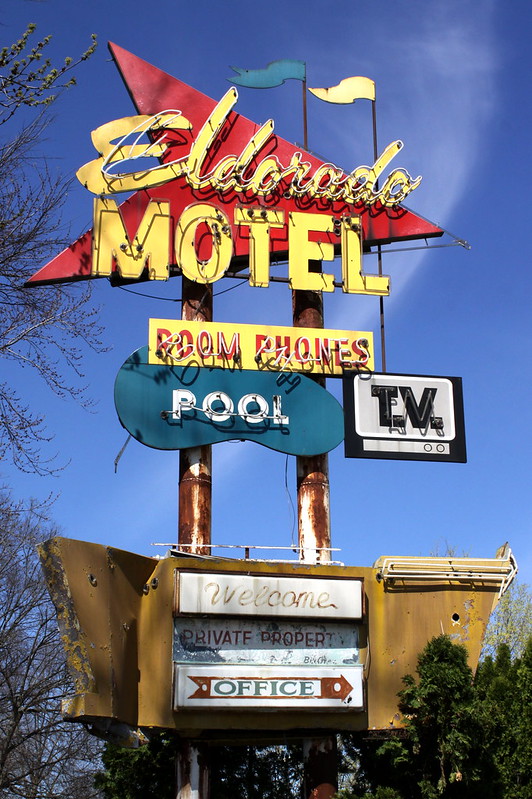
The historic Eldorado Motel sign is perhaps Nashville's least known neon treasure. I was unaware of this gem until reading Historic Nashville Inc.'s Civil Rights Walking Tour Brochure where it is stop #27.

This is located at 2806 Ed Temple Blvd. (Down the road from the Ted Rhodes Golf Course.) The actual motel was torn down ca. 2011 and only the sign remains. Go see it while you can - I had to park at the golf course and walk. It's also off the road a bit, so it's easy to miss.

Dr. Martin Luther King and Harry Belafonte spent the night here in Sept. 1961. King's Southern Christian Leadership Conference had arranged for Belafonte to perform at the Ryman Auditorium and they spent the night here.

Even if there was no associated history, it's also a fantastic neon sign. It's a little worn down but most of the neon tubes are intact. There's a couple of flags up top. The neon word Pool is on a pool shaped part of the sign. Likewise, the neon T.V. is on an old black & white television set.

Monday, January 18, 2016

Lorraine Motel / National Civil Rights Museum Room 306

Lorraine Motel / National Civil Rights Museum Room 306

As America honors Martin Luther King, Jr. on the third Monday in January, I'd like to share these photos of the National Civil Rights Museum that promotes the vision that Dr. King embraced.

Walter Bailey purchased the Windsor Hotel in 1945 and renamed it the Lorraine Motel. Located close the the center of Memphis, during the days of segregation the motel catered to an upscale black clientele.

In April 1968, King traveled to Memphis in support of striking sanitation workers. King stayed in room 306, located on the second floor of the Lorraine Motel. At 6:01 PM on April 4, 1968 while he was standing on the balcony outside his room, King was struck by a single bullet, causing him to fall backwards unconscious.

Following the assassination, Bailey left Room 306 undisturbed. While the Motel remained open for a few more years, Bailey worked to preserve the motel as a historic site raising funds to Save the Lorraine. The Martin Luther King Memorial Foundation bought the motel in 1982. The Motel officially closed in 1998 as the property transformed into a museum.

For architectural designs, the museum called upon McKissack & McKissack from Nashville, the first African American architecture firm in America. After purchasing adjoining property, the museum opened in Sept. 1991.

Today, on the grounds of the museum, a wreath is placed at the balcony where King was hit. The original sign for the museum has been preserved outside. From this iconic photo from the balcony there are two cars visible below, and there are replicas of these two cars at the museum today. For now, customers of the museum are allowed to look into the window of Room 306.
Monday, January 19, 2015

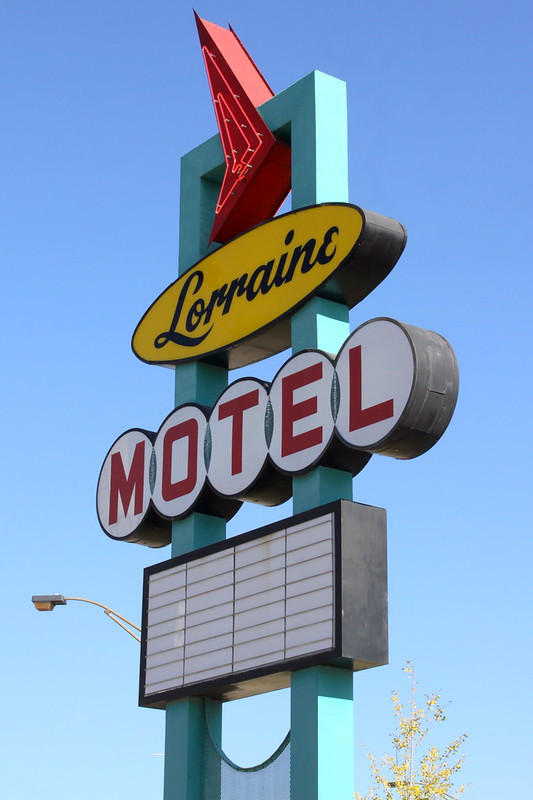
Lorraine Hotel Neon Sign - Memphis, TN

Lorraine Hotel Neon Sign

As America honors Martin Luther King, Jr. on the third Monday in January, I'd like to share this photo of the National Civil Rights Museum that promotes the vision that Dr. King embraced.

Walter Bailey purchased the Windsor Hotel in 1945 and renamed it the Lorraine Motel. Located close the the center of Memphis, during the days of segregation the motel catered to an upscale black clientele.

In April 1968, King traveled to Memphis in support of striking sanitation workers. King stayed in room 306, located on the second floor of the Lorraine Motel. At 6:01 PM on April 4, 1968 while he was standing on the balcony outside his room, King was struck by a single bullet, causing him to fall backwards unconscious.

Following the assassination, Bailey left Room 306 undisturbed. While the Motel remained open for a few more years, Bailey worked to preserve the motel as a historic site raising funds to Save the Lorraine. The Martin Luther King Memorial Foundation bought the motel in 1982. The Motel officially closed in 1998 as the property transformed into a museum.

For architectural designs, the museum called upon McKissack & McKissack from Nashville, the first African American architecture firm in America. After purchasing adjoining property, the museum opened in Sept. 1991.

Today, on the grounds of the museum, a wreath is placed at the balcony where King was hit. The original sign for the museum has been preserved outside. From this iconic photo from the balcony there are two cars visible below, and there are replicas of these two cars at the museum today. For now, customers of the museum are allowed to look into the window of Room 306.