Home     Daily Blog     Galleries     Maps     Contact

Showing posts with label Fisk. Show all posts

Sunday, January 30, 2022

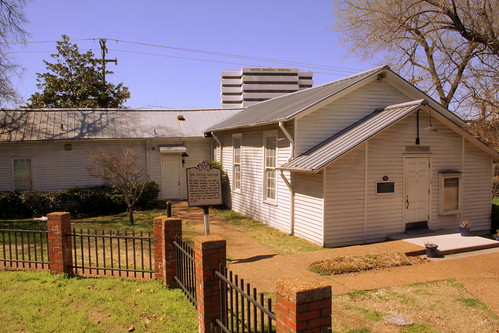
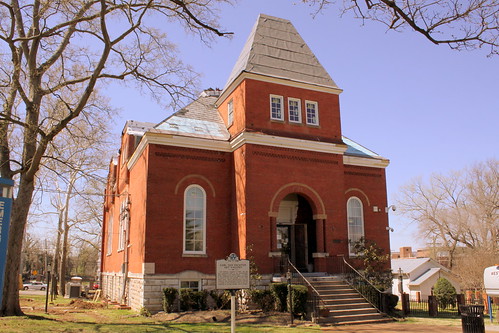
Fisk University: Carl Van Vechten Art Gallery

Fisk University: Carl Van Vechten Art Gallery

From the historic marker:
This building, completed in 1889, was the first gymnasium at any predominantly black college in the United States. In 1949, it was rededicated as an art gallery and named in honor of Carl Van Vetchen, a New York Music Critic, author, photographer, and art collector who encouraged Georgia O'Keefe to donate to Fisk University part of the art collection of her late husband, Alfred Stieglitz.

The building is undergoing renovations when I visited here in the Spring of 2015 and will reopen in 2016. The Gymnasium / Gallery is on the National Register of Historic Places as a contributing property to the Fisk University Historic District.

Friday, August 20, 2021

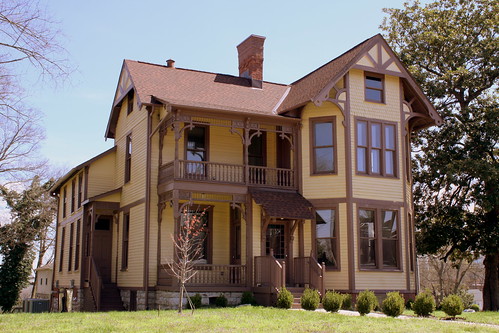
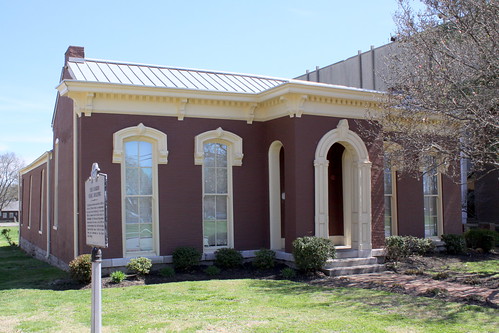
Fisk University Harris Music Building

Fisk University Harris Music Building

Text of the historic marker:
This Italianate structure was built ca. 1876 as the home of Richard Harris, an entrepreneur and owner of Harris Furniture Co. In the late 1880s, he became the first Black trustee of Fisk University. W.G. Waterman, a Fisk professor, became owner of the house, and in 1909 he conveyed ownership to Fisk. In 1927, the building became the Music Annex. In 1991, the Music Annex was rededicated as the Harris Music Building.

Tuesday, June 22, 2021

Post Card Tuesday: Fisk University Library


Cravath Hall - Fisk University

From the historic marker:
This neo-Gothic structure first served as the Erastus M. Cravath Memorial Library. Named for Cravath, the university's first president (1875-1900), it was designed by Nashville architect Henry Hibbs and built in 1929-30. The interior walls depict several murals by Aaron Douglas, the leading Harlem or Negro Renaissance painter and founder of the Fisk Art Department.

This building is part of the Fisk University Historic District listing on the National Register of Historic Places

Monday, January 4, 2021

John Wesley Work Home at Fisk University

John Wesley Work Home at Fisk University

According to the historic marker:
In 1937, this Victorian-style house became the home of John W. Work III. A teacher and composer for 39 years, he served his alma mater by enriching the Fisk musical traditions. Director of the Jubilee Singers, Work III, a serious composer, completed more than 100 compositions. He was not only an acclaimed composer and choral conductor, but also a recognized author, educator and ethnomusicologist.

His father, John W. Work II, composer of the Fisk alma mater, "The Gold and Blue," was known as rescuer and preservationist of Negro religious music. Work II's book, Folk Songs of the American Negro, was one of the first extensive studies on the origin and development of religious African-American music be a descendant of an ex-slave who lived during the time many of the songs has their beginnings.

Tuesday, July 28, 2020

Cravath Hall - Fisk University

Cravath Hall - Fisk University

From the historic marker:
This neo-Gothic structure first served as the Erastus M. Cravath Memorial Library. Named for Cravath, the university's first president (1875-1900), it was designed by Nashville architect Henry Hibbs and built in 1929-30. The interior walls depict several murals by Aaron Douglas, the leading Harlem or Negro Renaissance painter and founder of the Fisk Art Department.

This building is part of the Fisk University Historic District listing on the National Register of Historic Places

Wednesday, June 24, 2020

Fisk University's Jubilee Hall - Nashville, TN

Fisk University's Jubilee Hall (Alt view) - Nashville, TN

Jubilee Hall on the campus of Fisk University in Nashville, TN, was the university's first permanent building, completed in 1876. Funds to build Jubilee Hall were raised by the Fisk Jubilee Singers in their first European singing tour in 1873.

Jubilee Hall was declared a National Historic Landmark in 1974.

Tuesday, April 7, 2020

Fisk University's Jubilee Hall - Nashville, TN

Fisk University's Jubilee Hall - Nashville, TN

Jubilee Hall on the campus of Fisk University in Nashville, TN, was the university's first permanent building, completed in 1876. Funds to build Jubilee Hall were raised by the Fisk Jubilee Singers in their first European singing tour in 1873.

Jubilee Hall was declared a National Historic Landmark in 1974.

Wednesday, February 15, 2017

John Wesley Work Home at Fisk University

John Wesley Work Home at Fisk University

According to the historic marker:
In 1937, this Victorian-style house became the home of John W. Work III. A teacher and composer for 39 years, he served his alma mater by enriching the Fisk musical traditions. Director of the Jubilee Singers, Work III, a serious composer, completed more than 100 compositions. He was not only an acclaimed composer and choral conductor, but also a recognized author, educator and ethnomusicologist.

His father, John W. Work II, composer of the Fisk alma mater, "The Gold and Blue," was known as rescuer and preservationist of Negro religious music. Work II's book, Folk Songs of the American Negro, was one of the first extensive studies on the origin and development of religious African-American music be a descendant of an ex-slave who lived during the time many of the songs has their beginnings.

Tuesday, January 10, 2017

The Little Theater - Civil War Hospital Barracks - Fisk University

The Little Theater - Civil War Hospital Barracks - Fisk University

On a campus full of prominent historic buildings, the oldest one may be under-appreciated. According to the marker:

The Little Theater, circa 1860, is the oldest structure on the Fisk University campus. Erected as part of a Union Army hospital barracks during the Civil War, it was known as the "Railroad Hospital." The interior was remodeled for use as the Fisk campus theater in 1935.

In addition to a Nashville Historic Commission plaque on the front is this:
January 9, 1866
January 1, 1876
This building is one of the original buildings of Fisk University. During the Civil War it was used as a hospital Army barracks
--Class of 1932--

Today, the building is on the National Register of Historic Places as part of the Fisk University Historic District.

Friday, December 2, 2016

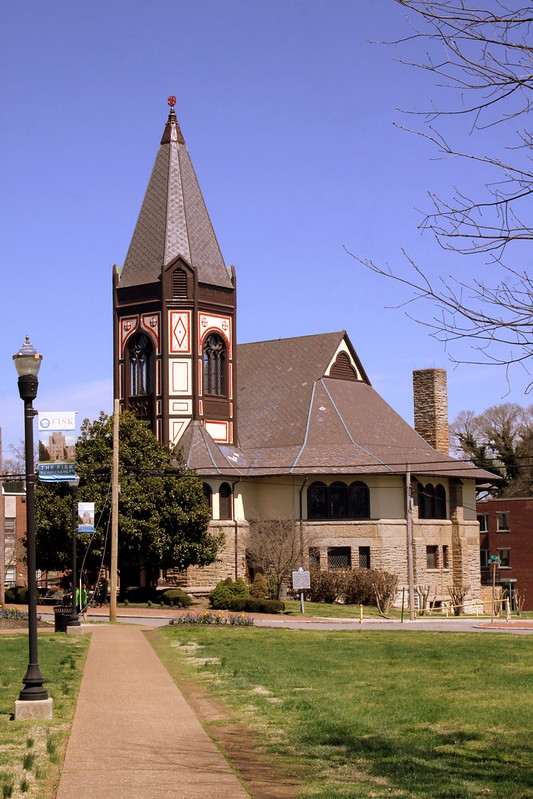
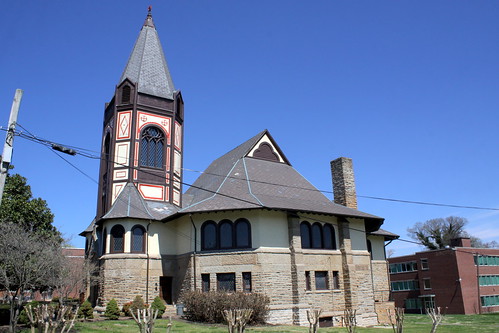
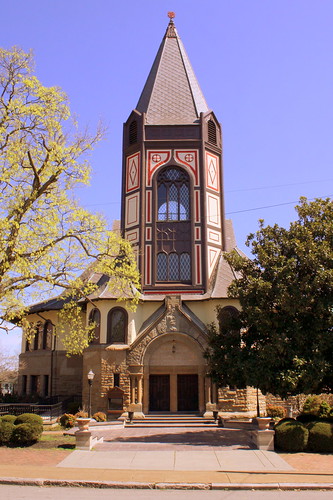
Fisk Memorial Chapel

Fisk Memorial Chapel

According to the historic marker:
Fisk Memorial Chapel, designed by New York architect William Bigelow, was erected in 1892 in memory of General Clinton B. Fisk, a founder of the University. The religious and cultural center of the campus, the Chapel has welcomed foreign dignitaries, outstanding concert artists, and renowned lecturers, such as Booker T. Washington and Dr. Martin Luther King, Jr.

Fisk Memorial Chapel

The Chapel is the home performance site for the famous Fisk Jubilee Singers. The building is on the National Register of Historic Places as part of the Fisk University Historic District.

To learn more, here is the history section on their website:
fiskmemorialchapel.com/History/History_of_the_Chapel/

Fisk Memorial Chapel

Wednesday, September 2, 2015

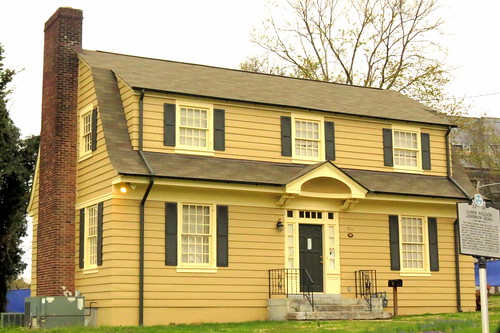
James Weldon Johnson Home - Nashville

James Weldon Johnson Home - Nashville

This home is located on D.B.Todd Blvd just down the road from Fisk University. The home is listed on the National Register of Historic Places as part of the Fisk University Historic District. According to the historic marker:

This Dutch Colonial house was built in 1931 for James Weldon Johnson. He served as U.S. Consul to Venezuela and Nicaragua, editor of the New York Age, and field secretary of the NAACP. Johnson's poem, "Lift Every Voice and Sing," set to music by his brother, J. Rosamond Johnson, is renowned as the Negro National Anthem. Johnson occupied the Adam K. Spence Chair of Creative Literature and taught creative writing at Fisk University from 1931 until his death in 1938.

Friday, October 14, 2011

The ornate tower of Fisk's Jubilee Hall

The ornate tower of Fisk's Jubilee Hall

Jubilee Hall is the focal point of the Fisk University campus and one of the prettiest buildings in Nashville. Not only is the building on the National Register of Historic Places, but it's one of 30 in Tennessee on the more select list of National Historic Landmarks.

In 1871, Fisk's popular singing group, the Jubilee Singers, went on tour and raised the money to have this building built. It became the first permanent structure erected in the South for the education of African Americans. Of special interest is the Appleton Room of Jubilee Hall, totally refurbished and adorned with a 14th-century ceiling from the Castle Polheim in Austria.