Home     Daily Blog     Galleries     Maps     Contact

Showing posts with label Cherokee. Show all posts

Wednesday, July 29, 2020

McMahan Indian Mound - Sevierville, TN

McMahan Indian Mound - Sevierville, TN

Here's an easy to miss spot on the way to Gatlinburg. It's a historic Indian Mound with business built around it. The small preserved and landscaped area is along the main road (US441) between a motel (Landmark Inn) and a Shoneys.

From the historic marker:
This Mississippian substructure,16 ft. high and 240 ft.in circumference, built during the Dallas phase (1200-1500), was first excavated in 1881, with artifacts being sent to the Smithsonian. Later excavations exposed nearby villages of the Woodland Indian dating from 200 A.D. to the Cherokee who roamed this valley when pioneers settled in the late 1700s.

Sunday, June 14, 2020

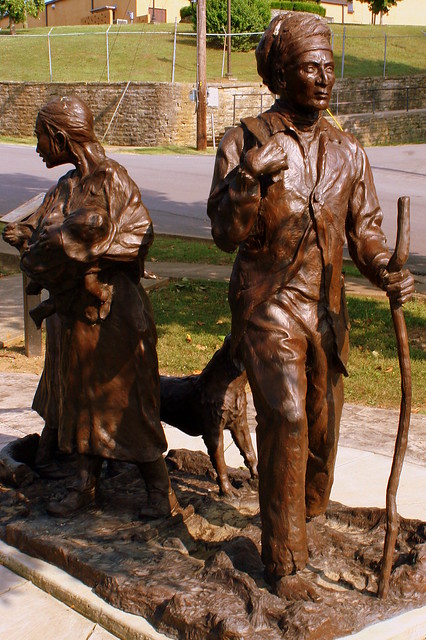
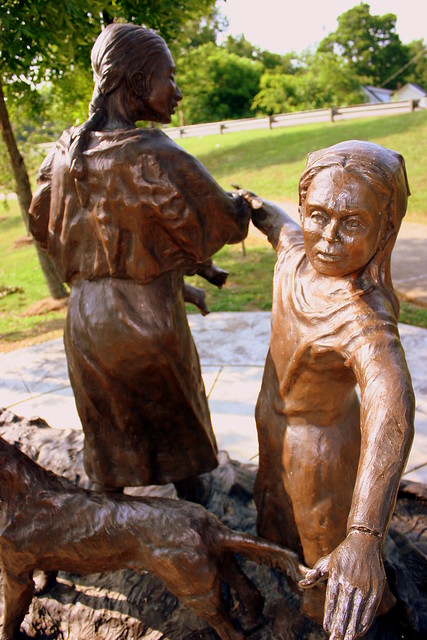
Nunahi-Duna-Dlo-Hily-I (Trail of Tears Statue)

Nunahi-Duna-Dlo-Hily-I

That is the name of this statue and translates to "The Trail Where They Cried." This statue is located at the Trail of Tears Interpretive Center in Pulaski, TN. For more info on this statue, look at the accomanying marker:
seemidtn.com/gallery/index.php?album=historical-markers%2...

This statue conveys emotion and can't be completely appreciated in one view, as there are four characters, each looking in a different direction.

Nunahi-Duna-Dlo-Hily-I

Saturday, July 9, 2016

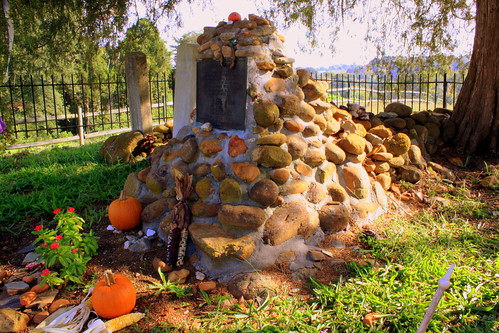
Burial Site of Nancy Ward, "The Pocahontas of Tennessee"

Burial Site of Nancy Ward, "The Pocahontas of Tennessee"

Nancy Ward was a princess of Cherokee Nation, and some call her The Pocahontas of Tennessee. Known to the Cherokee as Nanyehi, she was a Beloved Woman of the Cherokee, which means that she was allowed to sit in councils and to make decisions, along with the chiefs and other Beloved Women. She believed in peaceful coexistence with the European-Americans and helped her people as peace negotiator and ambassador. She also introduced them to farming and dairy production bringing substantial changes to the Cherokee society.

She died in 1822 and was buried atop a hill that overlooks the Ocoee River in Polk County. A century later, the Nancy Ward chapter of the Daughters of the American Revolution built this memorial at her gravesite. Today, this gravesite is easily accessible as a State Park, located along Old US411 a mile southwest of Benton. It is listed on the National Register of Historic Places as the Nancy Ward Tomb.

Read more about her here: en.wikipedia.org/wiki/Nancy_Ward
See the D.A.R. marker here: seemidtn.com/gallery/index.php?album=historical-markers%2...
See the TN Historic Marker: seemidtn.com/gallery/index.php?album=historical-markers%2...
See the TN Overhill Experience marker: seemidtn.com/gallery/index.php?album=historical-markers%2...

Thursday, November 19, 2015

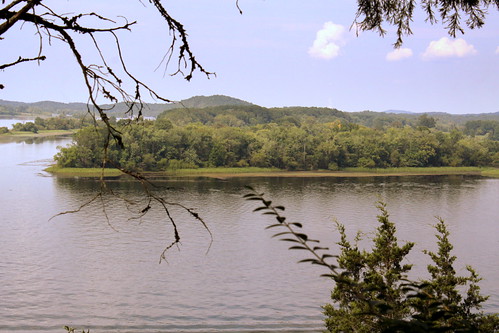
Hiwassee Island - Meigs County, TN

Hiwassee Island - Meigs County, TN

Hiwassee Island was the second largest in the Tennessee River until the 1940s when the TVA flooded part of the 781 acre island with the formation of the Chickamauga Dam Lake. The island is located in Meigs County at the confluence where the Hiwassee River meets the Tennessee River.

The island has been nominated for listing on the National Register of Historic Places. Archaeological artifacts dug from the island dates back to historic and prehistoric tribal peoples that lived on the island dating back to the late Woodland Hamilton phase (ca. A.D. 600-900), early Mississippian Hiwassee (ca. 1000-1300) and late Mississippian (ca 1000-1500).

The Cherokees which were the last tribe on the island left in 1818. The island is also called Jolly's Island named for Chief John Jolly. As a young boy Sam Houston lived on the island with the Cherokees. Chief Jolly adopted Sam and gave him an Indian name "The Raven." Possibly, this early influence guided his ambitions to settle the state of Texas. Will Rogers was another person of note that descended from the Rogers Family that lived on the island.

Today, the island is the Hiwassee Wildlife Refuge, serving as the home for many species including eagle and osprey. It is the staging ground for thousands of migrating Sandhill Cranes from November to February. This photo is taken from an observation deck atop a river bluff at the Cherokee Removal Memorial Park. It is a popular observation spot for birdwatchers, especially when the cranes come through.

Sunday, October 18, 2015

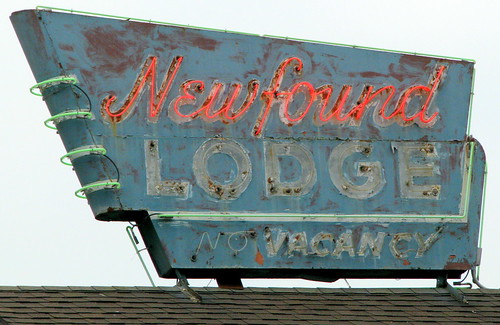
Newfound Lodge neon sign - Cherokee, NC

Newfound Lodge - Cherokee, NC

Cherokee is the home of many vintage motels with lovely neon signs. This one is along US441.

Saturday, April 25, 2015

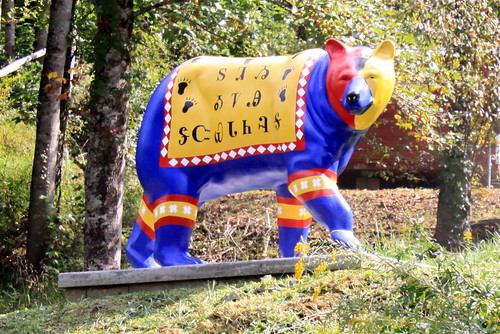
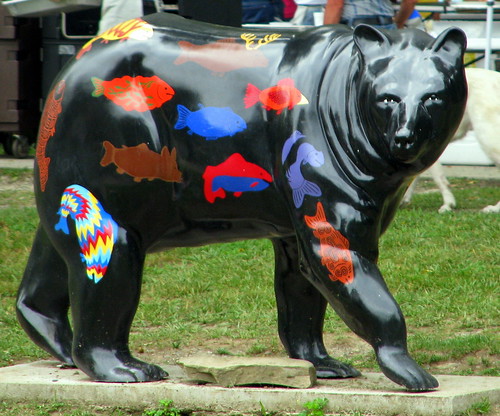
Cherokee Alphabet Black Bear

Cherokee Alphabet Black Bear

In and around Western North Carolina in Cherokee areas are several different Black Bear statues painted with different themes. This one was located near the eastern end of the Cherhola Skyway and Robbinsville, NC.

Friday, January 30, 2015

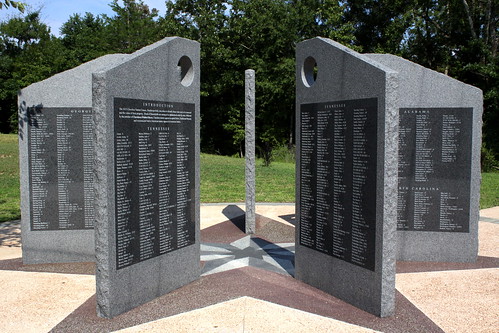
Blythe Ferry Cherokee Removal Memorial

Blythe Ferry Cherokee Removal Memorial

Blythe Ferry Cherokee Removal Memorial

Blythe Ferry was a ferry across the Tennessee River in Meigs County, TN. In 1838, the ferry served as a gathering point and crossing for the Trail of Tears. While the ferry no longer exists, the ferry site is now part of the Cherokee Removal Memorial Park, which was dedicated in 2005.

The Blythe Ferry site is situated along the eastern bank of the Tennessee River, just south of the mouth of the Hiwassee River. The site is located near a point where Meigs County, Rhea County, and Hamilton County meet. Highway TN60, which formerly crossed the river at the ferry, connects the area to Cleveland to the east, Dayton to the west, and Decatur to the north.

At the memorial site is a log cabin which houses the museum and serves as the visitors center. The Cherokee Removal Memorial is seven panels (one for each Cherokee clan) listing the names of each of the 2,537 heads of household forced to relocate. A short walk or drive from the plaza is an observation deck from a bluff overlooking the Ferry site.

for more info: www.cherokeeremoval.org/index.htm

Here is the Blyhte Ferry history on Wikipedia:
Blythe Ferry was established by William Blythe and his Cherokee wife, Nancy Fields, around 1809. The ferry was an important river crossing on the "Great Road" between Chattanooga and Knoxville. Blythe sold the ferry in 1825, and the Blythe family would make the trek west with the Cherokee in the 1830s. In 1836, the Treaty of New Echota was ratified, transferring all Cherokee lands east of the Mississippi River to the United States. The treaty called for a general relocation of the Cherokee Nation to the Indian Territory (modern Oklahoma). In 1838, President Martin Van Buren ordered General Winfield Scott to round up all Cherokees who had not voluntarily made the trek to Oklahoma and commence a forced removal. By the Fall of the that year, some 9000 Cherokee and 300 Creek had been imprisoned in stockades in Bradley County, a few miles to the east. It took several weeks to move the entire contingent across the river, with the last detachment crossing on November 12, 1838. Blythe Ferry operated until the mid-1990s, when a bridge was built spanning the river immediately downstream. The ferry site was placed on the National Register of Historic Places in 1982.

Saturday, September 13, 2014

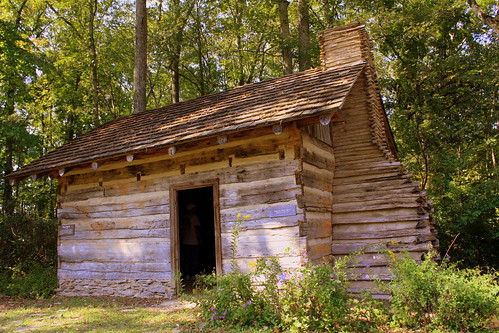
Squincy Bird Cabin

Squincy Bird Cabin

According to the plaque on the restored cabin, this was originally located in Cherokee, NC as it was the cabin of Chief Squincy Bird. Today, it is seen along the Reflection Riding Trail at the Chattanooga Nature Center.

Saturday, August 23, 2014

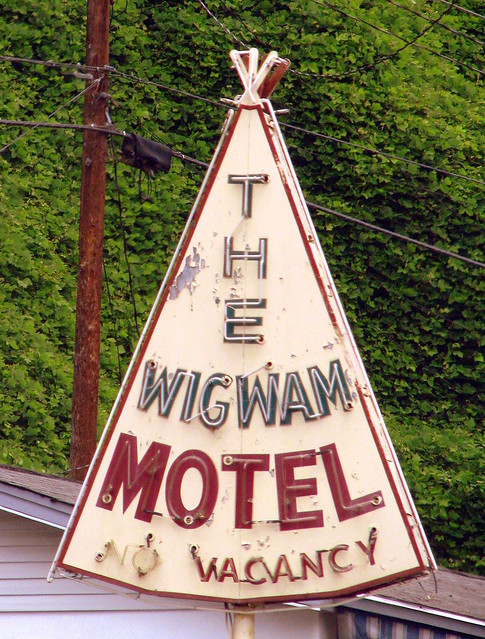
The Wigwam Motel neon sign

The Wigwam Motel neon sign

Why sleep in a motel named the Wigwam Motel (in Cherokee, NC) when you could sleep in an actual wigwam?

Friday, February 21, 2014

Conteaskee - McKaysville, GA

Conteaskee - McKaysville, GA

According to the marker:
Built by John Wahneetah, a Cherokee Indian, in 1914. For a period of time stood at the Cherokee Museum in Cherokee, NC. Restored by Bradley W. Deal of Cherokee descent in 2004.

In McKaysville, this faces the Toccoa River and a restaurant patio with Grand Street behind it.

Friday, April 27, 2012

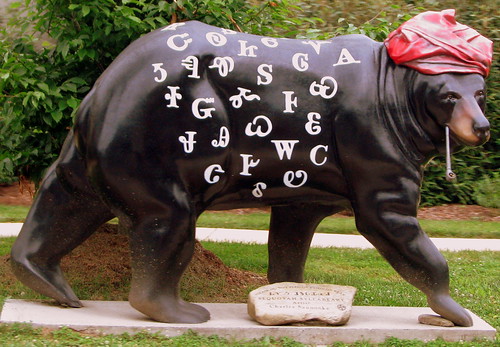
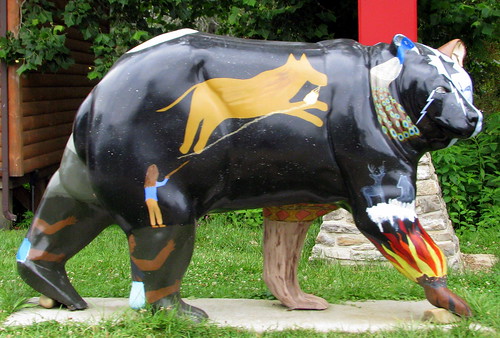
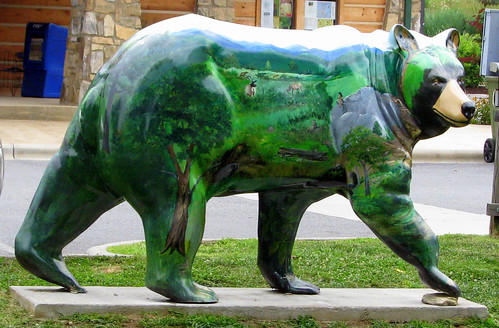
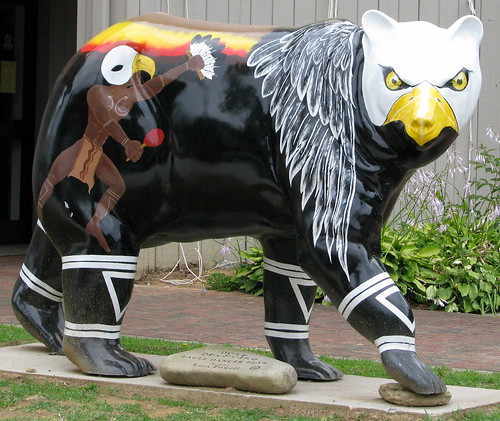
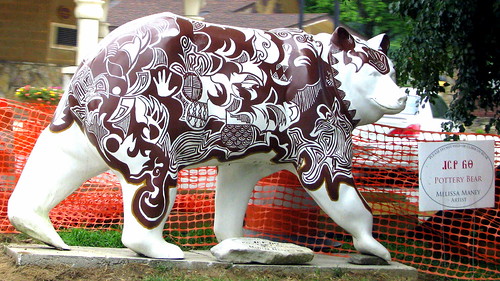
The Painted Black Bears of Cherokee, NC

Cherokee Bear: Sequoyah Syllabeary

"Sequoyah Syllabeary"

Since the thing for towns to do these days are to have statues of a mascot animal (like a few years ago Nashville had their catfish and Atlanta had their cows) Cherokee, NC has black bear statues all over town. This one was seen while driving highway US441 through town. There are many around town and here is a sampling.

Cherokee Bear

Cherokee Bear

Cherokee Bear: Eagle Dancer Bear
"Eagle Dance Bear"

Cherokee Bear: Pottery Bear
"Pottery Bear"

Cherokee Bear

Wednesday, September 7, 2011

Pink Motel - Cherokee, NC

Pink Motel - Cherokee, NC

Along US441 in the touristy area of Cherokee, NC, this motel appears to be one of the better maintained non-chain motels of the area (despite the rustiness of the sign). I guess more people enter the Smoky Mountains from the Gatlinburg side than at any other entry point, and Cherokee is on the other side from there along US441. If you are a fan of the golden age of roadside tourism, Cherokee's attractions may be more well preserved than Gatlinburg's, as many places on the Tennessee side have been torn down and replaced with more modern hotels, attractions and gift shops.